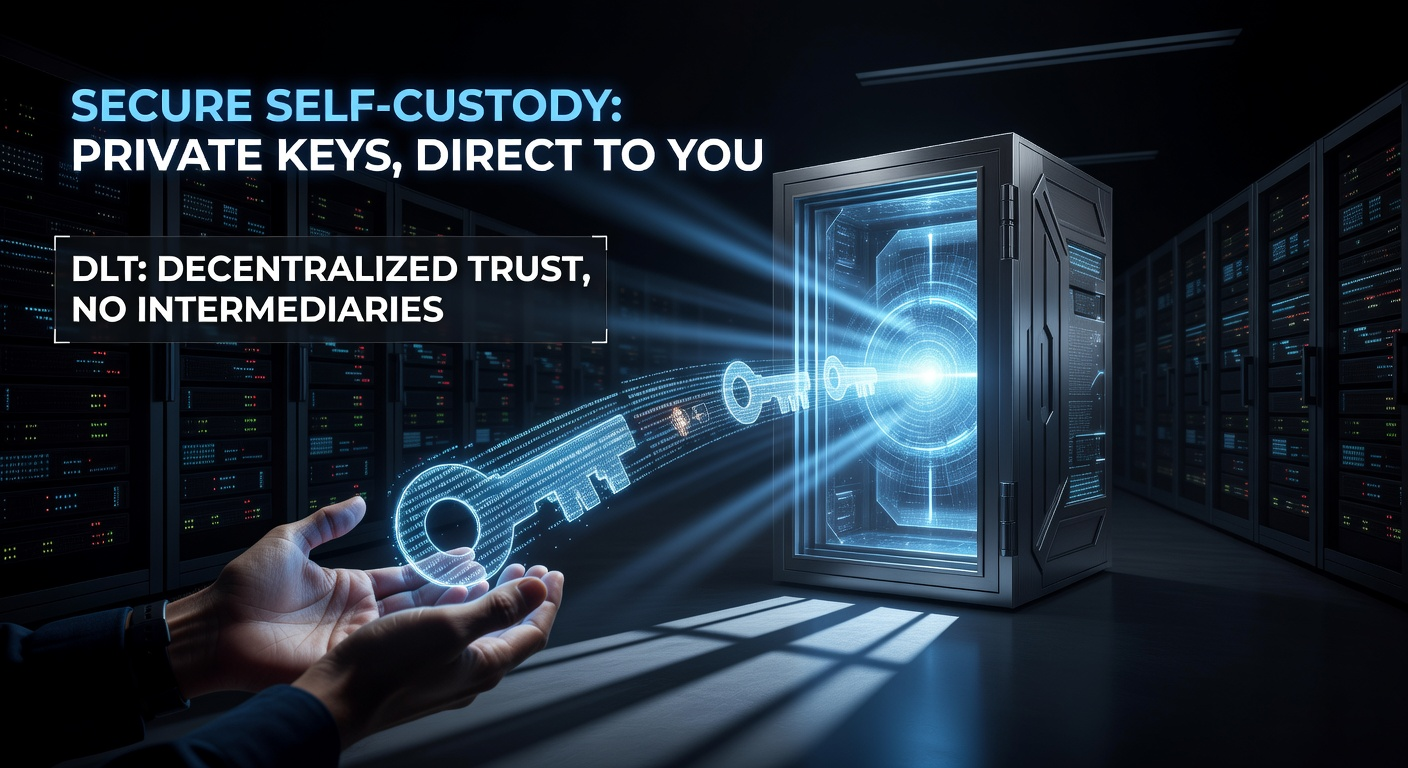
The Non-Custodial Advantage: What It Means When Your Platform Never Holds Keys
Custodial vs. non-custodial architecture in DLT platforms — and why the distinction matters for issuers, investors, regulators, and the platform itself.
In late 2022, FTX demonstrated in spectacular fashion what happens when a DLT platform holds user funds: if the platform fails, the funds fail with it. This was not a unique pathology of FTX. It is the fundamental risk of custodial architecture applied to digital assets.
For DLT infrastructure platforms — particularly those facilitating tokenized securities issuance — the architectural choice between custodial and non-custodial design is one of the most consequential decisions a builder makes.
The Custodial Model
In a custodial model, the platform controls the private keys associated with user wallets. From the user's perspective, they log in, see a balance, and can initiate transactions. Under the hood, the platform is executing those transactions on their behalf using keys the platform controls.
This model is familiar — it's how banks work. The bank holds your funds; you have a claim on them. The tradeoffs:
- ✅ Simpler user experience — no wallet management required
- ✅ Key recovery possible — platform can restore access if you lose your password
- ❌ Platform is a target — all user funds in one custody arrangement
- ❌ Platform failure = user loss — if the platform is insolvent, user funds are at risk
- ❌ Regulatory burden — holding user funds triggers money transmission licensing in most jurisdictions
The Non-Custodial Model
In a non-custodial model, the platform never holds or controls private keys. Users connect their own wallets (Xaman, Ledger, etc.) and sign transactions themselves. The platform facilitates the transaction workflow but never has the ability to move user funds unilaterally.
- ✅ Platform failure doesn't affect user funds — keys never touched the platform
- ✅ No money transmission licensing required — the platform isn't moving money
- ✅ Regulatory risk dramatically reduced — can't lose funds you don't hold
- ✅ Auditable — all transactions are on-chain and independently verifiable
- ❌ More complex UX — users must manage their own wallets
- ❌ No key recovery — user is solely responsible for wallet security
The Xaman Integration Pattern
For XRPL-based platforms, the Xaman wallet (formerly XUMM) has become the standard interface for non-custodial transaction signing. The workflow:
- Platform constructs the unsigned transaction (token issuance, trust line authorization, distribution)
- Platform sends the transaction to the Xaman API, which generates a QR code
- User scans the QR code with their Xaman app and reviews the transaction
- User signs with their biometric/PIN — private key never leaves their device
- Xaman submits the signed transaction to the XRPL
- Platform receives the on-chain confirmation
At no point does the platform see, touch, or store the user's private key. The platform's server is orchestrating a workflow; the user's device is the signer.
Regulatory Implications
The distinction between custodial and non-custodial matters enormously in regulatory analysis. FinCEN's guidance on money transmission explicitly addresses "control" of virtual currency. A platform that never controls funds is in a fundamentally different regulatory category than one that does.
For tokenized securities specifically: a non-custodial issuance platform is providing a service (workflow orchestration, compliance verification, transaction facilitation), not holding assets. This distinction affects licensing requirements, insurance obligations, and the platform's liability exposure if something goes wrong.
Why This Matters for Token Issuers Choosing a Platform
If you're a token issuer choosing a DLT issuance platform, the custody model of the platform affects you directly:
- A custodial platform that holds your issuance wallet's keys can theoretically issue tokens without your consent
- If the platform fails, your token's operational capability may be disrupted
- Regulators reviewing your offering will want to understand the custody arrangement
Non-custodial architecture is more work to build and slightly more friction for users. For serious, compliance-oriented tokenized securities, it's the only architecture that makes structural sense.
Ready to Build on XRPL?
OnRampDLT is the no-code XRPL token issuance platform for serious builders. Issue tokens, manage bonds, and distribute to investors — all without writing a line of Solidity.
Get Started Free →